
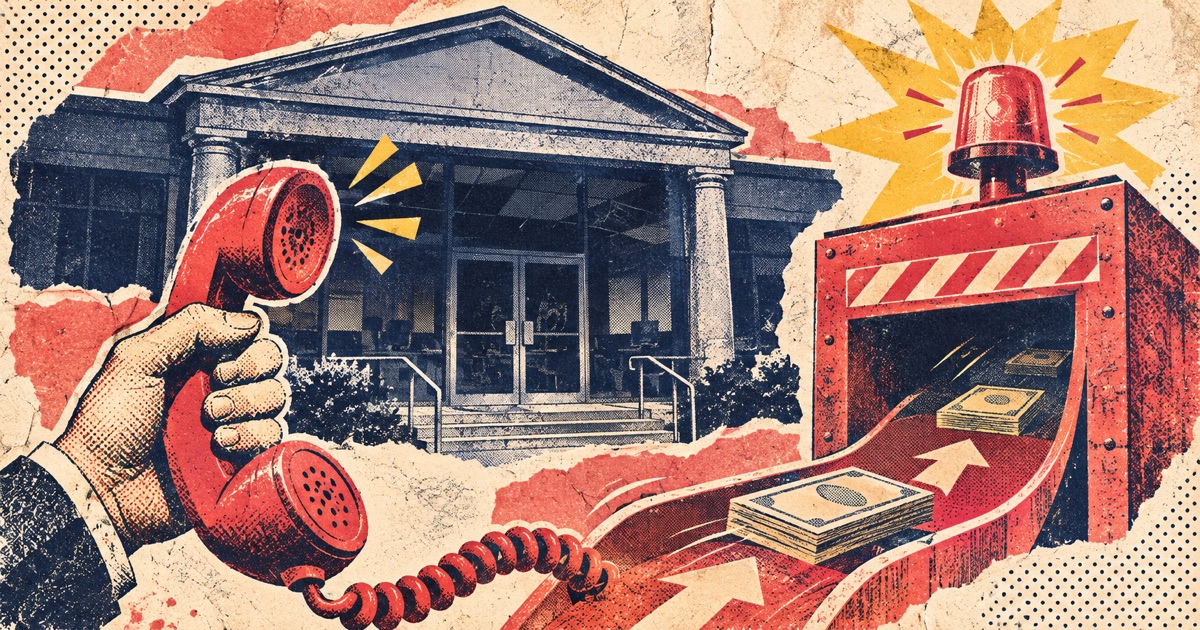
There's a special kind of panic that occurs when you open your banking app and nothing loads.
Your balance won't appear.
A payment seems to be missing.
You can't tell whether your transfer went through.
Suddenly, the same app you checked without thinking yesterday has become the digital equivalent of a locked vault with a handwritten sign saying, “Sorry for the inconvenience.”
And because we're all completely calm, rational human beings when we can't access our money, we immediately assume the worst.
That's understandable.
But it also creates exactly the kind of anxiety scammers love.
What Happened to Chase?
On November 16, 2026, customers of JPMorgan Chase reported problems accessing online banking services and completing transactions.
Some customers using other financial institutions also reported payment-related issues, including transactions involving Chase.
The disruption prompted speculation about a possible cyberattack.
Chase attributed the problem to a software bug involving internal hardware systems and explicitly stated that the issue was not cyber-related.
In other words, the banking disruption was real. The claims that it was caused by hackers were not supported by the bank's explanation.
But that distinction doesn't eliminate the potential for fraud.
Because whenever a bank has a highly publicized problem, criminals have an opportunity to pretend they're part of the solution.
How a Bank Outage Becomes a Scam
Imagine this.
You've spent the afternoon trying to check your account.
Then your phone rings.
A professional-sounding person introduces themselves as a representative of your bank's fraud department.
They know your name. Perhaps they even know which bank you use.
They explain that the bank experienced a system disruption and that your account has been flagged for suspicious activity.
Fortunately, they can protect your money.
All you need to do is verify a code, download a support application, or transfer your balance to a temporary secure account.
How thoughtful.
Except that's not a fraud investigation. That's the beginning of a scam.
The FTC has repeatedly warned about criminals impersonating financial institutions and persuading people to move money supposedly for protection.
Some attackers spoof caller ID to make the call appear to originate from the bank.
Others use convincing text messages, fake websites, or paid advertisements displaying fraudulent support numbers.
And with AI-generated voices and sophisticated social engineering becoming more accessible, a confident voice on the phone is not evidence of legitimacy.
The name on your caller ID isn't evidence either.
The “Safe Account” Scam
Let's address this one directly.
If someone contacts you unexpectedly and tells you to transfer money into a different account to protect it, treat that as a scam.
A real fraud department does not need you to send your life savings to a mysterious account controlled by someone else.
A legitimate financial institution may ask you to verify transactions through established channels, freeze a card, or follow documented security procedures.
That is very different from telling you to move money to an outside account.
The FTC is explicit about this.
Do not transfer funds to a supposedly secure account because someone contacted you claiming your money is at risk.
The same rule applies to cryptocurrency wallets, gift cards, payment apps, cash pickups, and anyone insisting that the transaction must remain secret.
A bank that requires secrecy, urgency, and a Bitcoin ATM is not conducting routine customer support.
What to Do When Your Banking App Goes Down
There are two problems to manage during an outage: maintaining access to your money and avoiding criminals exploiting the disruption.
1. Verify whether the bank is experiencing an outage
Check the bank's official website, verified social accounts, or established customer-service number.
Don't rely solely on random comments claiming every bank in America has been hacked.
And be careful searching for customer-service numbers. Criminals can purchase advertisements that place fake support listings above legitimate results.
Use the number printed on the back of your card or on a recent statement.
2. Don't repeatedly submit payments
If a transfer appears stuck, resist the temptation to submit it five more times.
The system may still be processing the first request.
Wait for a reliable status update, check the transaction history when service returns, and contact your bank if the result remains unclear.
A temporary error message doesn't necessarily mean the transfer failed.
3. Never provide verification codes to an unexpected caller
One-time codes are intended to help authenticate your access.
Criminals may attempt to use them to log in, authorize changes, or bypass security protections.
If someone calls and asks you to read a code back to them, end the conversation and contact the bank independently.
4. Never install remote-access software because someone called
A stranger claiming to be bank support doesn't need unrestricted access to your phone or computer.
Remote-access scams can allow criminals to watch your screen, access accounts, or manipulate transactions.
Decline the request and verify the issue using an official channel.
5. Review transactions after service returns
Look for unfamiliar transactions, duplicate payments, and unexpected account changes.
If you spot unauthorized activity, contact the financial institution immediately and ask about its dispute and fraud-reporting process.
Keep records of the issue and your communications.
6. Maintain a backup way to access essential funds
If possible, keep a payment method from a different institution and a modest amount of emergency cash available.
This won't solve every disruption, but it can provide flexibility when a particular bank or payment network is unavailable.
One More Thing: Talk to Your Family
Financial scams frequently target older adults, but vulnerability isn't determined by age.
Anyone experiencing stress, confusion, urgency, or a convincing impersonation attempt can be manipulated.
Have a conversation with family members about how bank fraud departments actually contact customers.
Explain caller-ID spoofing and why knowing someone's name doesn't make a caller trustworthy.
Consider asking their bank about available account alerts, trusted-contact arrangements, and other fraud-prevention options.
Not every bank offers the same controls, and a trusted contact doesn't automatically have authority to approve or block transactions.
For requests supposedly coming from family members, use an independently verified callback or a family passphrase.
ZoraSafe includes a rotating family passphrase capability because a familiar voice or an urgent story isn't always enough to establish who's really asking for help.
The important habit is verification before action.
The Real Problem Isn't Just That Banking Systems Fail
Technology fails. Even systems that process enormous amounts of money can experience bugs, outages, and operational problems.
What concerns me is how easily those failures can turn into opportunities for financial manipulation.
When people can't access reliable information, they're more likely to trust whoever offers an explanation.
And criminals know it.
So the next time your banking app stops working, don't assume your money has disappeared.
Check official sources. Avoid making duplicate transactions. Protect your authentication codes.
And remember:
If the bank is having technical difficulties, the person demanding an immediate wire transfer probably isn't there to help.
Sources
- Associated Press — November 16 banking disruption
- FTC — How to handle unexpected calls about money at risk
- FTC — Fake bank fraud alerts
- CFPB — Payment app outages