





Understand why an alert matters
See the campaign, risk level, location relevance, timing, and why the alert is being shown to you.
ZoraWatch brings together available community submissions and named public-source scam intelligence. Use it to understand patterns and next steps—not as proof that every scam has been found or verified.
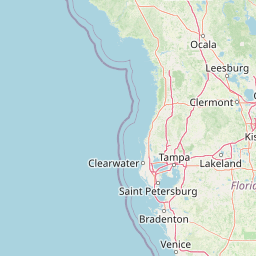
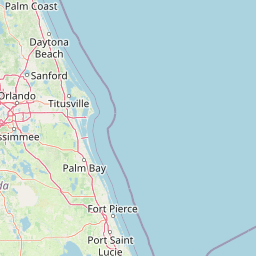
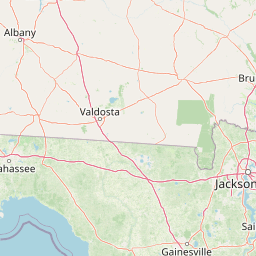
Filter the available Florida entries by ZIP code
ZoraWatch presents available scam campaigns, location relevance, risk signals, and plain-language explanations so you can review context before responding.
Follow the places that matter to you and review why an alert is relevant. The product examples shown here use demonstration content.
See the campaign, risk level, location relevance, timing, and why the alert is being shown to you.
Review scam patterns affecting your home, family locations, and other places you follow.
Review location context
See the entries currently available for Florida
Know exactly what to do
Use plain-language warning signs and next steps
Share useful context
Discuss a suspicious situation with people you trust
Contribute what you observed
Submit a report without including sensitive details
Calls, texts, emails, fake websites, and payment scams.
Community submissions and public-source entries are labeled separately.
Use an official channel before acting on a suspicious request.
Available entries are incomplete and do not establish that a person, message, or request is safe.
A concise methodology and limitations summary based on the behavior documented in the current product.
Community submissions and named public-source intelligence are presented separately.
Entries appear where usable location information is available. ZIP filtering does not establish complete local coverage.
The community-report view is limited to recent entries; public-source items display their source publication date when available.
The map is not a complete census, a guarantee of accuracy, or confirmation that an unlisted situation is safe.


Data Sources: Community Reports + Public-Source Threat Intel
Community submissions and public-source intelligence are different source types. Public-source entries link to their named source. Do not treat any entry as a guarantee of accuracy or complete coverage.
If you submit a report, describe what happened without including sensitive personal information.
Current entries from law enforcement, consumer protection agencies, and named public reporting sources. These are not community submissions.
The Florida Attorney General's Office and FDLE's Cyber Fraud Analytical Support Team shut down hundreds of fraudulent SunPass/E-ZPass lookalike websites used to harvest personal and financial data via fake toll-payment text messages. New phishing sites and smishing campaigns have continued to resurface through mid-2026, with messages threatening late fees and legal action to pressure immediate payment.
Do not click links in unsolicited toll text messages. Verify any balance directly at SunPass.com (type the URL yourself). Report the message to the Florida AG's Office and to ReportFraud.ftc.gov. Delete the text.
Fraudulent text messages impersonating FLHSMV claim recipients have an unpaid traffic violation and threaten license suspension, vehicle registration cancellation, and prosecution unless immediate payment is made via a link to a fake website. FLHSMV has stated it will NEVER contact consumers by text to collect fees or threaten suspension. A new surge was reported in South Florida in March–April 2026, with fake case numbers, invented Florida statutes, and non-.gov URLs used to deceive victims.
FLHSMV never collects fees or issues suspension threats via text. Do not click the link. Verify any genuine license/registration status at flhsmv.gov. Report the text to your local sheriff and to ReportFraud.ftc.gov.
A Dover, FL woman lost $15,000 after scammers used AI to clone her adult daughter's voice, fabricating a distress call claiming the daughter had caused a car crash and needed immediate bail money. A "public defender" co-conspirator called next and directed the victim to withdraw cash and hand it to a fake courier who arrived at her home. Scammers then demanded an additional $30,000. Hillsborough County detectives are investigating; the victim believes social media audio clips were used to train the voice clone.
Hang up and call the family member directly on their known number. Verify with another relative before doing anything. Never hand cash to a stranger sent to your home. Report to your county sheriff and to the FBI at ic3.gov.
Scammers are sending official-looking emails falsely claiming to be from the Florida Department of Business and Professional Regulation, demanding that licensed professionals (real estate agents, contractors, healthcare providers) submit driver's licenses, business EINs, and website links under threat of license suspension, fines, and enforcement action. A separate campaign impersonates DBPR callback services to extract payment or personal information. DBPR confirmed it emails only from @myfloridalicense.com and never requests personal information via email.
DBPR only emails from @myfloridalicense.com and never requests personal information by email. Do not respond or click links. Verify license status by logging in directly at myfloridalicense.com. Report the email to DBPR and to ReportFraud.ftc.gov.
Scammers are posing as law enforcement officers and calling Jacksonville residents about fake warrants for missing jury duty, then texting official-looking fake U.S. District Court documents. They demand immediate payment to avoid arrest. JSO confirmed that neither law enforcement nor courts will call, text, or email to demand payment, Social Security numbers, or banking details. Scammers have been observed spoofing the JSO non-emergency line (904-630-0500) itself.
Hang up. Neither law enforcement nor courts will ever demand payment by phone or text. Call the Clerk of Courts directly, or JSO non-emergency at 904-630-0500 from a number you look up yourself. Do not pay or share personal information.
Scammers are impersonating law enforcement officers and contacting Lee County residents, claiming the victim has an active arrest warrant, missed jury duty, or is involved in a crime. They demand payment via credit/debit card, cryptocurrency, gift cards, Zelle, Venmo, or Cash App, and may ask for Social Security numbers or banking information. Sheriff Marceno confirmed the Lee County Sheriff's Office will NEVER contact residents requesting money or personal information for any reason.
Hang up. Real law enforcement never requests money or personal information by phone. Call the Lee County Sheriff's Office directly from a number you look up yourself. Report the call to LCSO and to ReportFraud.ftc.gov.
Sheriff Marceno issued a January 2026 alert warning Lee County residents about cryptocurrency investment fraud ("pig butchering"), in which scammers build trust through social media, dating apps, misdialed text messages, or fake job ads, then introduce fake crypto investment platforms showing inflated returns. Victims are coached to open real exchange accounts and transfer funds; the scammer then disappears with all deposited money. FBI 2025 IC3 data shows $914.5M in cryptocurrency-related losses in Florida — the highest of any crime category in the state.
Never invest based on advice from someone you met online. Verify any platform with FINRA / SEC investor.gov. Once crypto is transferred it is almost never recoverable. Report to LCSO and to the FBI at ic3.gov.
A sophisticated phishing operation targeting homeowners, contractors, and businesses in Palm Beach County involves fraudulent emails that include accurate property addresses, real permit or case numbers, and the names of actual county government officials. The emails demand immediate "processing fee" payments via wire transfer, peer-to-peer apps, or cryptocurrency under threat of project delays or penalties. County officials confirmed payments are only accepted via the official portal or in person at the Vista Center. The FBI identified non-.gov email domains as the primary red flag.
Palm Beach County only accepts permit payments via the official online portal or in person at the Vista Center. Never wire funds or pay by crypto/Zelle for a permit. Verify any request by calling PZB directly from a number you look up on pbc.gov.
Florida Lieutenant Governor Jay Collins and DOEA Secretary Michelle Branham launched Operation Senior Shield, a statewide initiative responding to escalating elder fraud. The program deploys a multi-disciplinary fraud strike team, real-time scam alerts, and ethical-hacker-led education. FBI 2025 IC3 data shows Florida's 60+ victims filed 17,147 complaints totaling $709.8M in losses — second highest in the U.S. The FTC separately reported $258M stolen from Floridians over 50 in 2025. Top vectors include tech support, romance, government impersonation, and investment fraud.
Pause before sending money or sharing information. Call a trusted family member or the Florida Elder Helpline (1-800-963-5337). Report suspected elder fraud to DOEA and to the FBI at ic3.gov.
Florida AG James Uthmeier issued an urgent consumer alert following 23andMe's March 23, 2025 bankruptcy filing, warning Floridians that their genetic data — the most sensitive personal information possible — could be sold to unknown third parties as part of bankruptcy asset liquidation. The AG advised all Florida 23andMe customers to immediately (1) delete genetic data from their accounts, (2) request destruction of physical DNA samples, and (3) revoke all research consent permissions. The alert invoked Floridians' rights under Florida's Digital Bill of Rights.
Log in directly at 23andme.com, delete your genetic data, request destruction of your physical sample, and revoke all research consents. Treat any unexpected 23andMe-themed email as phishing — verify by going to the site yourself.
USPIS's Southern Florida district issued warnings during National Consumer Protection Week (March 2–8, 2025) targeting five key imposter scam types: fake bank/government representatives, grandparent emergency scams, romance scams (never send money to someone met online), USPS delivery-failure texts (all fake — delete and forward to spam@uspis.gov), and lottery/sweepstakes advance-fee fraud. USPIS stressed that USPS will NEVER send unsolicited texts and that any package-delivery-problem text is a phishing attempt.
USPS does not send unsolicited delivery-problem texts — delete them and forward to spam@uspis.gov. Verify any delivery directly at usps.com using the tracking number you originally received. USPIS reporting line: 1-877-876-2455.
The FBI's 2025 Internet Crime Report (released April 2026) documents Florida as the #3 state by both complaint volume and total losses: 71,843 complaints and $1.596 billion in losses. Florida seniors (60+) filed 17,147 complaints with $709.8M in losses (#2 nationally). Cryptocurrency-related fraud accounts for $914.5M of Florida's losses. Top national crime categories were investment fraud ($8.6B), business email compromise ($3.05B), and tech/customer support scams ($2.13B). Cyber-enabled fraud now accounts for 85% of all IC3 losses nationally.
Verify any payment request through a known, separately looked-up channel before sending money. Report cyber-enabled fraud to the FBI at ic3.gov, and to your bank immediately if funds have been transferred.
Short, local, specific, and actionable. Older seeded alerts are intentionally excluded.
No community reports have been published for this view yet.
ZoraWatch is still tracking public-source scam intel above. If this happened to you, report it to help protect your community.
Report a ScamFollow these 4 steps to protect yourself and others
Stop communication. Do not click links, call numbers, or send money.
Contact the organization directly using a number you find yourself (not from the message).
Report it to ZoraWatch, FTC (reportfraud.ftc.gov), and your local authorities.
Share what happened with family members, especially older adults who may be targeted next.
🚨 Major Red Flags
Requests for gift cards, cryptocurrency, wire transfers, Zelle, Cash App, or urgent secrecy are major red flags. Legitimate organizations never demand these payment methods.
Share what you observed without including sensitive personal information. Submission does not guarantee publication or a specific review time.
In-depth research, pattern analysis, and actionable guidance from the ZoraSafe team. Not raw community reports.
Meet the mobile app built for the moment before the mistake. A premium feature article introducing ZoraSafe Mobile and why scam protection has to happen before the click.
Read intelHow a legal research company evolved into a nationwide data aggregation system used across government, insurance, and risk analysis—often without warrants or individual consent.
Read intelYour DNA is the most permanent data that exists about you. If you sent a spit sample to 23andMe, that uniquely identifying information is now a corporate asset in a bankruptcy auction. 15 million people are about to find out what it means to be a saleable asset.
Read intelShare your ZIP code and email to register interest in ZoraWatch updates. Delivery, timing, and local coverage are not guaranteed.
Install ZoraSafe to run user-initiated checks, see supported warnings where enabled, and get clear next steps. ZoraSafe does not guarantee detection or prevention.
Submit a city request to help ZoraSafe understand interest in future location coverage.
Submitting this form records a location request; it does not guarantee coverage or notification.
How to interpret the map and submissions
The map can show community-submitted reports and separate public-source intelligence entries that are available to ZoraWatch. It is not a complete record of scams in any location.
No. Available entries are limited and may not include a scam you are seeing. Verify suspicious contact through an official channel you find independently.
No. Community submissions and public-source entries are displayed as different source types. Public-source entries identify the originating organization and publication date when available.
The report is submitted to ZoraWatch for processing. Publication, review timing, redaction details, and notification behavior are not guaranteed. Do not include sensitive personal information in the description.
Use it as context, not as a guarantee. Pause, verify through an independent official channel, and report suspected fraud to the appropriate organization, the FTC, or IC3.
Available map information may be incomplete or change over time.
When you're ready to check suspicious content, get plain-language guidance, and use optional trusted support, ZoraSafe can help.