
Privacy in 2025 Isn't Just About Data — It's About Who's Pretending to Be You
Imagine waking up, yawning, checking your phone—and finding a brand-new account in your name, trading crypto at 3 a.m., and somehow showing on your credit report. You blink. You rub your eyes. You think: "That's not me." But here's the twist: It wasn't you at all. It was someone—or something—pretending to be you. In 2025, privacy isn't just "lock your data." It's "lock your identity even from the AI bots that want to live your life."
This isn't a scene from a dystopian sci-fi novel; it's a rapidly approaching reality. Recent reports indicate a staggering 66% increase in identity fraud instances in 2023, with a significant pivot towards digitally-enabled impersonation. As AI capabilities skyrocket, reaching astonishing levels of verisimilitude in voice, image, and even behavioral patterns, the very definition of identity and privacy is being rewritten. We're moving from a world where data breach risks meant stolen credit card numbers to one where sophisticated AI models can construct an entirely convincing digital doppelgänger, capable of defrauding financial institutions, manipulating social circles, and even influencing public opinion—all in your name. The fight for privacy in 2025 isn't just about protecting your PII; it's about safeguarding your very self from the encroaching shadows of synthetic identity theft.
The Age of the Digital Doppelgänger: How AI Is Redefining Identity Theft
The landscape of identity theft has always evolved, but AI introduces a paradigm shift. Gone are the days when a stolen Social Security number or credit card was the primary concern. Now, adversaries equipped with advanced AI tools can construct a "synthetic identity" – a persona that incorporates elements of a real individual (often taken from data breaches) and blends them with fabricated details to create a seemingly legitimate new identity. These aren't just one-off scams; they are often sophisticated, long-term operations designed to evade detection by conventional fraud prevention systems.
Voice Clones and Deepfakes: Beyond Recognition
One of the most immediate and terrifying manifestations of this trend is the rise of AI voice cloning and deepfakes. With just a few seconds of audio from a public interview, a social media video, or even a voicemail, sophisticated AI can generate a near-perfect replica of a person's voice. This cloned voice can then be used to:
- Social Engineer Victims: Imagine receiving a call from what sounds exactly like your CEO asking for an urgent wire transfer, or a frantic plea from a loved one asking for personal details. This is no longer theoretical. The FBI reported a case where a deepfake audio of a CEO's voice was used to defraud a company of over $243,000.
- Bypass Voice Authentication: Many financial institutions and service providers use voice biometrics for authentication. As AI voice cloning improves, these systems become vulnerable.
- Create False Narratives: Deepfake videos can place individuals in situations they were never in, saying things they never said, causing reputational damage, financial loss, and even legal complications. We've seen how AI Pranks, Real 911 Calls: Why "Just Joking" With Deepfakes Can Get People Hurt underscores the dangers even seemingly harmless deepfakes can pose.
Professor Hany Farid, a renowned expert in digital forensics and deepfakes, warns, "The ability to generate incredibly realistic and deceptive media is no longer the domain of Hollywood studios; it's accessible to anyone with a computer and the right software. This democratizes disinformation and makes it incredibly difficult to trust what we see and hear."
Behavioral Mimicry: The Ultimate Impersonation
Even more insidious is the potential for AI to mimic behavioral patterns. By analyzing public data—social media posts, online comments, purchasing habits, and even gait analysis from CCTV footage—AI can build a profile that goes beyond mere voice and image. It can predict how you might answer a security question, what content you'd engage with, or even what language patterns you typically use. This allows for:
- Evasion of Fraud Detection Systems: Many fraud detection algorithms look for anomalous behavior. If an AI can convincingly mimic a user's typical online habits, it can bypass these safeguards, making fraudulent transactions appear legitimate.
- Targeted Phishing and Manipulation: An AI model trained on your persona could craft incredibly convincing phishing emails or social engineering attempts tailored precisely to your interests and vulnerabilities, making them virtually indistinguishable from genuine communications.
This behavioral mimicry closes the loop on digital impersonation, creating fully realized synthetic identities that are hard to detect even by advanced human analysts.
The Nexus of AI and Cybercrime: Beyond Traditional Attacks
The integration of AI into cybercrime is far from theoretical; it's actively happening. A recent report highlighting that AI Is Now in 1 Out of 6 Cyber Incidents: Here's What That Actually Looks Like in Real Life demonstrates the tangible impact AI is having on the threat landscape.
Automated Account Creation and Credit Fraud
AI is exceptionally good at automating repetitive tasks. This makes it a perfect tool for creating vast numbers of fraudulent accounts. Bots can:
- Generate Personal Information: AI can synthesize names, addresses, and other details that pass initial verification filters.
- Bypass CAPTCHAs: Advanced AI-powered bots can easily defeat many CAPTCHA challenges, clearing a significant hurdle for automated registration.
- Exploit Data Breaches: AI can sift through massive databases of stolen PII, combinining disparate pieces of information to construct new, viable identities for opening credit lines, bank accounts, and even getting government benefits.
This automated process drastically scales up the potential for identity fraud, turning what was once a labor-intensive operation into a high-volume assembly line of deception.
AI-Powered Phishing and Social Engineering
The precision and personalization that AI brings to phishing attacks are unprecedented. Instead of generic spam, victims receive highly customized messages that often leverage their own publicly available information.
- Dynamic Lure Generation: AI can craft unique phishing emails, texts, or instant messages for each target, adjusting the language, urgency, and specific details based on known interests or recent activities of the victim.
- Contextual Impersonation: Beyond voice deepfakes, AI can generate text that perfectly mimics the writing style of a trusted contact, making fraudulent emails incredibly difficult to spot.
- Sentiment Analysis and Exploitation: AI can analyze the emotional state implied in a victim's online posts or responses and tailor follow-up communications to exploit those emotions (e.g., appealing to fear, urgency, or curiosity).
This level of sophistication makes traditional "spot the misspelled word" advice for phishing detection increasingly obsolete.
Model Namespace Attacks: The Supply Chain Risk
A less visible but equally dangerous threat emerges when AI itself becomes the target or vector of attack. Model namespace attacks are a sophisticated form of supply chain compromise targeting AI models and their dependencies. Just as software supply chains can be compromised, so too can the development, training, and deployment pipelines of AI systems.
Attackers might:
- Inject Malicious Code: Within open-source pre-trained models or libraries that are widely used.
- Poison Training Data: Introduce subtle biases or vulnerabilities into the data used to train an AI model, which can then lead to predictable errors or backdoors in the deployed AI.
- Compromise Model Registries: Manipulate or replace legitimate AI models with malicious versions.
This means the very AI tools designed to protect us, or even mundane applications powered by AI, could be turned against us. If a malicious AI model, unknowingly trusted by an organization, has access to sensitive user data, the potential for identity theft and other cybercrimes multiplies exponentially. Understanding the nuances of The AI App You Trust Might Be Running Someone's Else's Code: Inside Model Namespace Attacks is crucial for an organization's overall cybersecurity posture.
Building Your Digital Fort Knox: Actionable Steps for Identity Protection
Protecting yourself in this new era requires a multi-layered approach, a proactive mindset, and a willingness to adapt your security practices.
1. Fortify Your Digital Front Door: Authentication and Access
- Mandate Multi-Factor Authentication (MFA) Everywhere: This is non-negotiable. Even if your password is stolen, MFA acts as a critical second barrier. Prioritize hardware tokens (like YubiKey) or authenticator apps over SMS-based MFA, which can be vulnerable to SIM-swapping attacks.
- Strong, Unique Passwords with a Manager: Use a reputable password manager to generate and store complex, unique passwords for every single online account.
- Biometrics with Caution: While convenient, biometrics (fingerprints, facial recognition) are not infallible. Some sophisticated deepfake techniques can bypass facial recognition, and fingerprints can be lifted. Always use biometrics in conjunction with other authentication methods, never as a sole identifier.
- Regular Security Audits: Periodically review the "Authorized Devices" or "Active Sessions" sections in your social media, email, and banking accounts. Log out of unfamiliar devices.
2. Guard Your Persona: What You Share Online
- Mind Your Digital Footprint: Every post, every like, every comment contributes to an AI's ability to build a profile of you. Be mindful of what personal information you share – even seemingly innocuous details like your pet's name, your favorite coffee shop, or your travel plans can be pieced together.
- Stricter Privacy Settings: Routinely check and update privacy settings on all social media platforms. Limit who can see your posts, photos, and personal information.
- "Think Before You Pink" (or Click): Be extremely wary of online quizzes, surveys, and chain messages that ask for seemingly trivial details like "What was your first car?" or "What's your mother's maiden name?" These are often social engineering mechanisms to collect answers to common security questions.
- Voice Sample Scarcity: Be conscious about where your voice is recorded and publicly available. Podcasts, lengthy voice notes, and public video diaries can all become training data for voice clones.
3. Monitor for Early Warning Signs: Your Personal Radar
- Regular Credit Report Checks: Federal law allows you to get a free credit report from each of the three major credit bureaus (Equifax, Experian, Transunion) once every 12 months via annualcreditreport.com. Stagger these, so you're checking one every four months. Look for accounts you don't recognize or unusual inquiries.
- Identity Theft Protection Services: Consider subscribing to an identity theft protection service. These services often monitor credit, dark web activity, and other markers for signs of compromise.
- Financial Account Alerts: Set up alerts for any transactions above a certain threshold, new account openings, or suspicious activity on your bank or credit card accounts.
- Dark Web Monitoring: While many identity theft services offer this, you can also use tools like Have I Been Pwned (https://haveibeenpwned.com/) to check if your email address has appeared in known data breaches.
4. Respond and Recover: If the Worst Happens
- Act Immediately: If you suspect identity theft, time is of the essence.
- Contact Financial Institutions: Notify your bank, credit card companies, and any other relevant financial entities immediately.
- Place a Fraud Alert/Freeze: Contact one of the credit bureaus to place an initial fraud alert. This bureau will then notify the other two. To truly restrict access, consider a credit freeze, which prevents new credit from being opened in your name.
- File a Police Report: Obtain an official police report. This document is often required when disputing fraudulent charges or accounts.
- Report to the FTC: File a report with the Federal Trade Commission (FTC) at IdentityTheft.gov. This creates a recovery plan and provides official documents.
- Change All Passwords: Change passwords for all accounts, starting with email and banking.
Organizational Responsibility: Securing the Collective Identity
While individual actions are crucial, organizations bear a significant responsibility in this new threat landscape. The weakest link in the supply chain often becomes the entry point for adversaries. For a deeper dive into overall cybersecurity resilience, a good starting point is Click with Confidence: ZoraSafe's Monthly Safety Reflection.
1. Robust Data Minimization and Protection
- Collect Only What's Necessary: Re-evaluate data collection practices. If you don't need it, don't store it. Every piece of PII held is a liability.
- Strong Encryption: Implement end-to-end encryption for all sensitive data, both in transit and at rest.
- Access Controls and Segmentation: Implement strict, granular access controls based on the principle of least privilege. Segment networks to limit lateral movement in case of a breach.
2. AI Security and Ethical Development
- Secure AI Development Lifecycle (MLSecOps): Integrate security considerations at every stage of AI model development, from data acquisition to deployment and monitoring. This includes securing training data, models, and deployment infrastructure.
- Adversarial AI Testing: Proactively test AI models against adversarial attacks, including data poisoning, model evasion, and model inversion techniques.
- Transparency and Explainability (XAI): Strive for explainable AI models, allowing for auditing and understanding of how decisions are made, which can help detect manipulative behaviors.
- Ethical Guidelines: Develop and enforce clear ethical guidelines for the use of AI, particularly regarding identity verification, surveillance, and data processing.
3. Enhanced Fraud Detection Systems
- Adaptive AI-Powered Fraud Detection: Implement fraud detection systems that leverage AI and machine learning to identify anomalous behavioral patterns, not just static rules. These systems must be continuously updated to counter new synthetic identity techniques.
- Behavioral Biometrics: Integrate behavioral biometrics (e.g., how a user types, how they navigate a website) into authentication and fraud detection, making it harder for simple deepfakes or stolen credentials to pass.
- Cross-Organizational Collaboration: Share threat intelligence regarding new synthetic identity patterns and attack vectors with other organizations and industry bodies.
4. Employee Training and Awareness
- Deepfake and Voice Clone Awareness: Educate employees, especially those in finance or executive roles, about the increasing sophistication of deepfake audio and video. Implement verification protocols for high-value transactions.
- Strong Internal Verification Protocols: For any sensitive request (e.g., money transfers, data access), mandate multi-channel verification. For example, if you receive an email from a CEO, verify with a phone call to a known number, not the one provided in the email.
- Phishing Simulation Training: Conduct regular and sophisticated phishing simulations, including those designed to mimic AI-generated, personalized attacks.
The holiday season, in particular, often sees a spike in targeted attacks. Awareness campaigns around risks like Holiday Shopping Scams: What to Watch Out For can be beneficial beyond just personal protection, informing employees about common social engineering tactics that can translate to enterprise risks.
The Future of Identity and Privacy: A Shifting Battlefield
The battle for privacy in 2025 is fundamentally a battle for identity. As AI becomes more sophisticated, the distinction between a genuine individual and a synthetic construct will blur. This isn't just about financial fraud; it's about the erosion of trust, the undermining of democratic processes (through AI-generated disinformation), and the fundamental challenge to what it means to be an individual in a hyper-connected, AI-driven world.
Consider the potential for sophisticated AI to not just replicate identity, but to actively forge new ones, creating entirely fabricated digital personas that exist solely to propagate misinformation, conduct illicit activities, or even influence elections. The lines between real and fake, human and machine, are becoming increasingly indistinct.
The future demands a proactive, adaptable stance from individuals, organizations, and governments. We must invest in advanced detection technologies, foster ethical AI development, and empower individuals with the knowledge and tools to protect their unique digital selves.
Conclusion: Reclaiming Your Digital Self
The year 2025 marks a pivotal moment in the evolution of privacy. It's no longer just about securing your data bits and bytes; it's about safeguarding the very essence of your identity from clever algorithms and malicious actors that seek to wear your face, speak with your voice, and act as your digital doppelgänger. The threats are potent, pervasive, and constantly evolving.
While this new landscape can seem daunting, it is not insurmountable. By understanding the threats, adopting robust personal cybersecurity hygiene, and demanding greater responsibility and ethical development from technology providers and organizations, we can collectively push back against the tide of synthetic identity theft.
It's time to take control of your digital narrative. Review your privacy settings, enable multi-factor authentication everywhere, monitor your credit, and stay informed about the latest threats. Your identity is your most valuable asset in the digital age. Protect it fiercely.
Don't wait for your digital doppelgänger to emerge from the shadows. Start building your defenses today. Educate yourself, secure your accounts, and become an advocate for stronger privacy and ethical AI. The future of your identity depends on it.
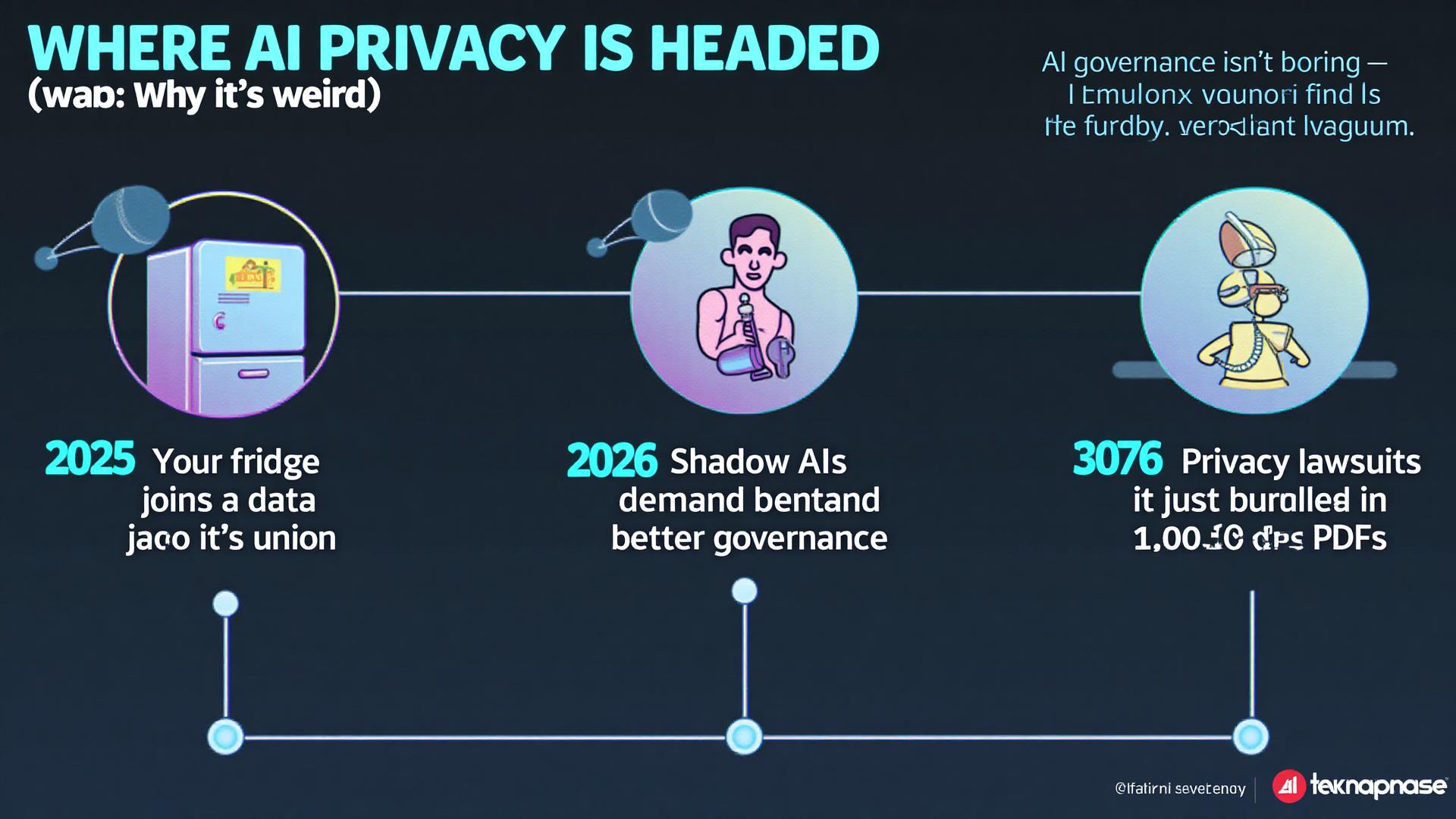
What the future of privacy looks like in an AI-driven world.
Empowering individuals to shape a privacy-conscious future.