
It's almost Thanksgiving, which means America is preparing for one of its most cherished traditions:
Ordering an unreasonable number of things online and then obsessively refreshing the tracking information.
Somewhere, a delivery driver is preparing to bring you a package containing an item you absolutely needed because it was 35% off.
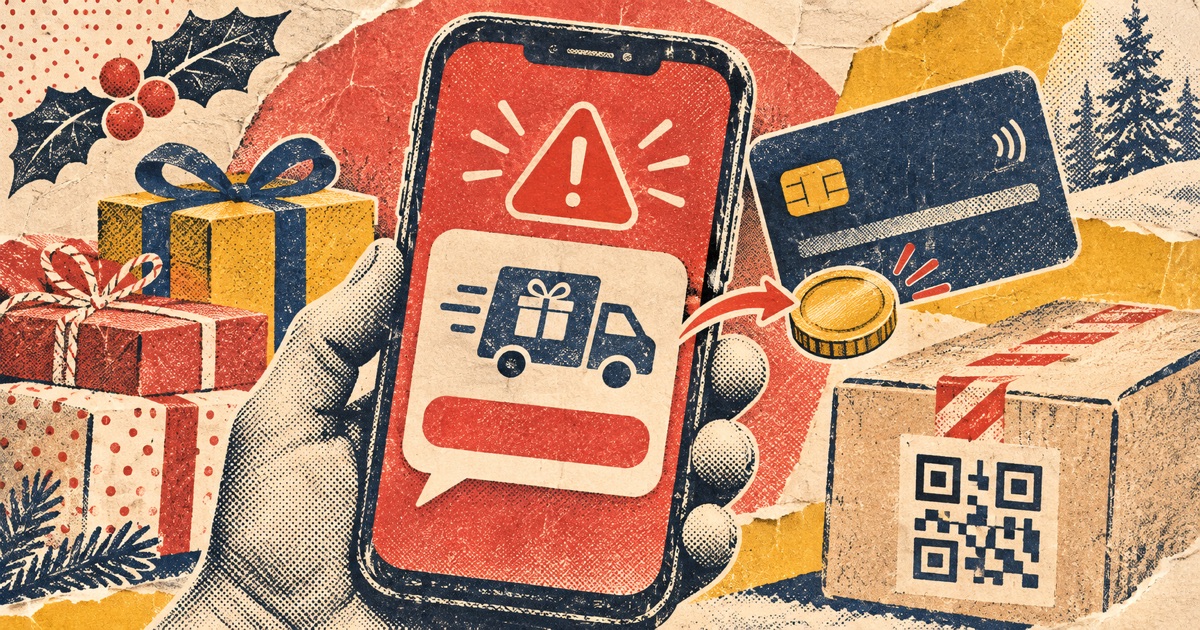
Meanwhile, cybercriminals are preparing to tell you that package can't be delivered unless you pay $1.95.
And provide your credit card number.
And possibly your Social Security number.
You know. Standard shipping procedure.
Holiday shopping creates a predictable increase in deliveries, order confirmations, shipping updates, and customer-service messages.
It also creates the perfect camouflage for scams.
The Text That Starts Everything
You receive a message claiming to come from USPS, UPS, FedEx, or another delivery service.
It might say:
“Your package could not be delivered due to an incomplete address.”
Or:
“Your shipment has been temporarily suspended.”
Or:
“Please pay a small redelivery fee to avoid returning your package.”
Naturally, there's a link.
The message might even include a tracking number, official-looking logo, or threatening deadline.
What happens when you follow it?
You may arrive at a website designed to look almost identical to a legitimate shipping company's website.
The site asks for an address, contact information, or a small payment.
But the criminals aren't interested in your $1.95 shipping fee.
They're interested in collecting payment-card details, personal information, passwords, or other information they can exploit.
The FTC has documented this category of fraudulent shipping notification for years.
And the tactic remains effective because it blends into something people are already expecting.
Why These Messages Work
The sophistication isn't necessarily in the technology.
It's in the timing.
If you haven't ordered anything, a mysterious shipping message might seem strange.
But what if you've ordered six gifts from three retailers, your spouse ordered another four, and your teenager has somehow purchased something you haven't approved?
You genuinely have no idea what's supposed to arrive.
The scammer doesn't need to know what you've ordered.
They just need to contact enough people who are expecting packages.
That's a very large audience in November.
It's also why the message often asks for a tiny payment.
A $1.95 charge doesn't immediately sound like financial catastrophe.
People are more likely to dismiss it as an annoying shipping fee.
But once the criminal has your payment information, the potential harm becomes much larger.
There's Another Scam: The Package You Didn't Order
In August 2026, the FTC published updated guidance about brushing scams.
A brushing scam can involve someone sending an unsolicited package to a real person's address.
The package might contain something inexpensive or completely random.
Why?
Because scammers or dishonest sellers may use the delivery record to support fake online reviews, making it appear that a legitimate customer received and reviewed a product.
Sometimes the package includes a QR code claiming to explain who sent it or how to return it.
Scanning the code could direct you to a phishing website.
So now we have two problems:
Packages you ordered that scammers pretend can't be delivered.
And packages you didn't order that scammers may want you to interact with.
What a magical time of year.
Are QR Codes Dangerous?
QR codes aren't inherently malicious.
They're simply a way to encode information, often a website address.
The risk comes from where they send you and what you're asked to do afterward.
A QR code on an unexpected package may open a fraudulent website.
The site might ask you to sign in, enter a credit card, or verify personal information.
Don't assume a QR code is trustworthy just because it's printed on something physical.
A scam doesn't become legitimate because it arrived in cardboard.
How to Avoid Holiday Delivery Scams
1. Stop clicking shipping links in unexpected texts
I know. Sometimes the message looks legitimate.
Sometimes it even arrives while you're waiting for a package.
That doesn't make the link trustworthy.
Open the retailer's app or website directly and check the order.
If you have a tracking number, enter it manually on the shipping company's official website.
2. Don't pay mysterious redelivery fees
If a message says you must immediately pay a small fee to prevent your package from being returned, verify the claim independently.
Legitimate carriers have established processes for delivery issues.
A random link in an unsolicited text isn't an appropriate place to enter payment-card information.
3. Turn on transaction alerts
Most banks and card issuers offer notifications when a purchase or transaction occurs.
Enable them, especially for the cards you use online.
If a fraudulent charge appears, you'll have a better chance of noticing quickly.
4. Use unique passwords for shopping accounts
Your email account and major shopping accounts deserve strong, unique passwords.
A password manager helps prevent reuse.
Enable multifactor authentication or passkeys wherever they're supported.
Remember that an attacker accessing your email may also be able to interfere with password resets on other accounts.
5. Be suspicious of unexpected QR codes
If you receive an unsolicited package, don't scan a QR code merely to discover who sent it.
Contact the retailer through its official website if you need to investigate.
The FTC also notes that consumers generally don't have to pay for or return unordered merchandise addressed to them.
That does not mean you should keep or open something clearly delivered to someone else by mistake.
6. Report suspicious messages
Use your phone's report-junk feature.
You can also forward scam texts to 7726, which spells SPAM.
Report suspected fraud to ReportFraud.ftc.gov.
7. If you've already entered information, take action
If you provided a credit card number, contact the issuer immediately and explain what happened.
If you submitted a password, change it through the legitimate website and review account activity.
If you reused the password elsewhere, change those accounts too.
If you provided sensitive identity information, visit IdentityTheft.gov for tailored next steps.
A Family Conversation Worth Having Before Black Friday
One of the simplest ways to reduce holiday scam risk is to talk about it before everyone starts shopping.
Tell family members that delivery scams often arrive as texts.
Explain why small fees can be bait.
Remind them that a familiar company logo doesn't authenticate a message.
For older relatives, consider helping them save direct links to their favorite retailers and shipping carriers.
If someone isn't comfortable navigating a website, show them how to check an order from inside the app they already use.
A little preparation can prevent an expensive mistake.
And please resist the temptation to treat someone who falls for a convincing scam as foolish.
The people operating these schemes are deliberately exploiting human behavior.
Educating people works better than embarrassing them.
The Holiday Reality Check
Criminals don't take the holidays off.
They adapt their scams to whatever people are doing.
In November and December, that means shopping, shipping, discounts, gift cards, and last-minute purchases.
The good news is that you don't need to become a digital forensics expert to protect yourself.
Verify deliveries through official channels.
Don't enter payment information through unexpected links.
Check accounts regularly.
And remember:
If a package containing a $14 candle supposedly requires your Social Security number to clear customs, something has gone spectacularly wrong.
Happy holidays.
May your packages arrive safely, your relatives behave themselves, and your credit card number remain your business.
Sources
- FTC — Think that USPS text is real?
- FTC — August 2026 brushing-scam guidance
- FTC — Fake shipping notifications during the holidays