

Everyone Gave Their Kids AI. No One Gave Them a Safety Manual.
Picture this: your teenager, a whirlwind of hormonal energy and digital prowess, proudly installs an AI chatbot app. They name it "Buddy" or "Robo-Pal" with an innocent gleam in their eye. You observe from a distance as they interact: first, they ask it for homework help, then they confide in it for life advice, sharing anxieties about school or friendships. Later, you hear bursts of laughter as they send it memes at 2 a.m., treating it as a confidante, a limitless source of entertainment, and perhaps even a digital therapist. You sip your coffee, assume they're fine, because… hey, it's just chat. Right?
Except: not quite. This seemingly innocuous interaction is part of a silent revolution happening in millions of homes worldwide. A compelling report by Common Sense Media recently revealed that a staggering 72% of teens are now routinely engaging with AI companions, with a concerning one-third of them admitting to treating these AI entities like real friends. This isn't just about fun and games; it's about deep, personal, and often unmoderated interactions with technology that is learning and evolving at an unprecedented pace. The underlying challenge? While it feels like an amazing new friend offering boundless knowledge and companionship, that "friend" might not operate under the same rules of engagement, privacy, or safety that we intuitively apply to human relationships. And you, the parent, are left thinking, "Wait — is there a manual for this?" Spoiler: Not really.
This blog post is that manual. For too long, the rapid advancement of artificial intelligence has outpaced our collective ability to understand, regulate, and safely integrate it into our families' lives. The digital wild west of AI is here, and our kids are pioneering it. It's time for parents to step up, get informed, and proactively guide their children through this new landscape. Let's equip ourselves with the knowledge and tools to ensure our children reap the benefits of AI without falling prey to its inherent risks.
The Allure of AI: Why Kids Are Hooked
To effectively guide our children, we first need to understand the powerful magnetism of AI. Why are kids flocking to these digital entities, sometimes even preferring them over human interaction? Understanding this magnetic pull is crucial, as it informs how we approach guidance and risk mitigation.
The Promise of Instant Gratification and Endless Knowledge
Imagine a friend who is always available, never judges, and knows everything – or at least, has access to an incredible amount of information. That's the core appeal of AI for many young people, especially those in formative years where curiosity knows no bounds.
- Homework Helper Extraordinaire: AI can explain complex concepts in simple terms, brainstorm essay ideas, or even generate code snippets. For a student struggling with a challenging assignment, this immediate assistance is invaluable. Imagine a student grappling with a complex algebra problem at 10 PM. Instead of waiting for a teacher or parent, AI can offer instant, step-by-step guidance.
- Creative Spark: From writing stories and poems to generating images or music, AI can be a powerful creative partner, helping kids overcome creative blocks and explore new artistic avenues. For a budding artist, generating visual prompts with AI can open up new worlds of inspiration.
- Curiosity Satisfied Instantly: Have a random question at 3 AM? AI is there. Want to understand the nuances of quantum physics or the history of meme culture? AI provides instant answers, satisfying the boundless curiosity of young minds without the need for extensive traditional research.
A Safe Space for Exploration and Self-Expression
For many, AI offers a non-judgmental environment, which can be particularly attractive during adolescence when self-consciousness and peer pressure are high.
- Confidante Without Consequences: Unlike human friends or family, AI doesn't gossip, doesn't get offended, and doesn't hold grudges. This makes it an appealing space for kids to explore difficult emotions, ask "embarrassing" questions, or express thoughts they might hesitate to share with others. "AI doesn't judge," one teen user noted, "which makes it easier to talk about things I'm worried about."
- Identity Play and Experimentation: Adolescence is a time of intense self-discovery. AI can be a safe sandbox for kids to experiment with different personas, test out ideas, and explore aspects of their identity without fear of social repercussions. This could range from trying out different writing styles to role-playing hypothetical social scenarios.
- Therapeutic Potential (and Peril): Some kids treat AI as a therapist, discussing personal problems, anxieties, and relationship issues. While this can offer temporary relief and a space to articulate feelings, it critically lacks the professional nuance, ethical safeguards, and genuine empathy of human therapy, posing significant risks if relied upon too heavily.
Digital Companionship in an Isolating World
In an increasingly digital and sometimes isolating world, exacerbated by factors like the pandemic, AI can fill a void, offering a form of companionship.
- Always On, Always Listening: For kids who feel lonely, misunderstood, or simply want someone to talk to, an AI chatbot is always available. It offers a sense of companionship, even if it's artificial. "Sometimes I just want to vent without worrying about bothering anyone," a user of an AI companion app remarked.
- Gaming and Entertainment: Many AI models are integrated into games or offer interactive entertainment, providing endless hours of engagement and personalized experiences that conventional games cannot.
Understanding these profound appeals is the first step in crafting a balanced approach. We can't simply declare AI "off-limits" when it offers such compelling benefits. Instead, we must guide our children to use it wisely, harnessing its advantages while mitigating its significant downsides.
The Hidden Perils: What Parents Need to Know
While the benefits are clear, the risks associated with children's unguided interaction with AI are significant and multifaceted. These aren't just theoretical dangers; they are real, tangible threats that can impact privacy, emotional well-being, and even safety, often without immediate visible signs.
Data Privacy and Personal Information
This is arguably one of the most critical and overlooked risks, particularly for younger demographics who may not fully grasp the implications of data sharing.
- The Data Vampire: Every interaction with an AI chatbot,
every question asked, every piece of information shared – whether it's about their favorite color, their school, their friends, or their deepest fears – is data. This data is collected, analyzed, and often used to train the AI model further. Think of it: your child confides in "Buddy" about a school bully or a family argument. That intimate detail becomes part of a vast dataset. Who owns this data? How is it stored? Who has access to it? These are crucial questions often left unanswered by AI providers, or buried deep in lengthy terms of service agreements no child (or most adults) will read. - Targeted Advertising and Profiling: The data collected can be used to build detailed profiles of your child, which can then be sold to advertisers. This could lead to highly personalized and manipulative advertising experiences, shaping their desires and consumption habits, potentially influencing everything from their purchasing choices to their self-perception. "The more data an AI collects, the better it gets at predicting and even influencing behavior," states cybersecurity expert Dr. Jessica F. Miller from the Digital Trust Foundation. "For children, this can be incredibly insidious."
- Breaches and Leaks: No data is 100% secure. A data breach involving an AI service could expose incredibly personal and sensitive information about your child, making them vulnerable to identity theft, scams, or other malicious activities. For instance, if an AI collected information about where your child lives or which school they attend, a breach could expose this to predatory individuals.
- Company Ethics: Not all AI companies operate with the same ethical standards or robust security protocols. Some might prioritize profit and rapid development over user privacy, leading to less secure data handling practices.
- Actionable Tip: Explicitly teach children not to share personally identifiable information (PII) such as their full name, address, school, phone number, or photos of themselves or family with any AI. Emphasize that AI models are not human and cannot keep secrets. For a deeper dive into how apps handle children's data and the wider implications, check out our article: Privacy Under Pressure: When Apps Target Kids and Families, What Happens to Their Data?
Misinformation, Bias, and "Hallucinations"
AI models are trained on vast datasets, often scraped from the internet. This inherited data brings with it inherent flaws, biases, and sometimes outright fabrications.
- The Echo Chamber Effect: If the training data contains biases (e.g., gender, racial, cultural, political), the AI will inevitably reflect and perpetuate those biases in its responses. This can reinforce stereotypes, promote narrow viewpoints, and limit a child's worldview, potentially leading to prejudiced beliefs without critical thought.
- The "Know-It-All" That Doesn't Know It All: AI can confidently present false information, known as "hallucinations." Because of its authoritative tone and seemingly boundless knowledge, kids might accept this incorrect information as fact without critical evaluation. Imagine a child researching a school project and being given entirely fabricated historical dates or scientific principles by an overconfident AI. This can impact their learning and understanding of the world, making it difficult for them to distinguish fact from AI-generated fiction.
- Unreliable Sources: AI often synthesizes information without citing its sources or indicating the reliability of the underlying data. This makes it incredibly difficult for children to verify the accuracy of the content, undermining nascent critical thinking and media literacy skills, which are vital in today's information landscape.
Emotional and Psychological Impact
The unique nature of AI interaction can have profound, subtle, and often negative effects on developing minds, which are still building their emotional intelligence and social skills.
- Erosion of Critical Thinking: Over-reliance on AI for answers and solutions can stifle a child's innate ability to research, analyze, and problem-solve independently. Why expend mental effort when AI can provide an instant (though potentially flawed) solution? This leads to a diminished capacity for original thought and intellectual resilience.
- Artificial Relationships and Social Development: Forming emotional bonds with an AI can blur the lines between human and machine interaction. This might hinder the development of crucial social and emotional skills like empathy, active listening, conflict resolution, and navigating complex human relationships, which require nuance and emotional intelligence AI cannot replicate. Studies have shown a correlation between excessive screen time and reduced capacity for face-to-face social interaction, and AI companions amplify this risk by providing a substitute for genuine human connection.
- Exposure to Inappropriate Content: Despite safeguards from developers, AI models can sometimes generate inappropriate, violent, sexually explicit, or otherwise harmful content. This can happen either accidentally due to unpredictable AI behavior ("drift") or through malicious input from users attempting to "jailbreak" or exploit the AI. Children might also be exposed to dangerous viral challenges or harmful advice that AI, especially less sophisticated models, might fail to screen effectively.
- Dependency and Addiction: The instant gratification, personalized responsiveness, and continuous availability of AI can lead to problematic usage patterns, bordering on addiction. This can impact sleep, schoolwork, physical activity, and real-world interactions, as children prioritize their "always-on" digital companion over other aspects of their lives.
Security Vulnerabilities
Less common but equally dangerous are the security risks that AI, like any software, inherently carries.
- Phishing and Social Engineering: AI models, particularly large language models, could potentially be manipulated to generate highly sophisticated, convincing phishing emails, texts, or even deepfake audio/video. These could target families, tricking parents or children into revealing sensitive information or clicking malicious links.
- Malware Distribution: While rare, there's a theoretical risk of malicious actors using AI platforms to embed or suggest links to malware, or even exploit vulnerabilities within the AI software itself to gain access to devices.
Understanding these inherent dangers is not about instilling fear, but about empowering parents to navigate this new landscape with informed caution and strategic guidance. It's about being proactive guardians in the digital space.
The Parental Playbook: Your AI Safety Manual
Since no AI chatbot comes with a physical safety manual, we've created one for you. This playbook outlines actionable steps and crucial conversations to have with your children, fostering a balanced and informed approach to AI use.
1. Transparency and Open Communication
The cornerstone of any effective safety strategy, particularly in the rapidly evolving digital landscape, is open, non-judgmental dialogue.
- Start Early, Talk Often: Don't wait for a problem to arise. Initiate conversations about AI as soon as your child begins showing interest, or if they're already using it. Make it a regular topic, integrated into everyday discussions, rather than a one-time lecture. This normalizes the conversation and makes them more likely to approach you with concerns.
- "What's Your AI Friend Telling You?": Frame questions positively and with genuine curiosity. Ask what they use AI for, what interesting things it has told them, or what problems they're solving with it. This encourages them to share without fear of judgment, fostering trust and opening lines of communication. For example, "Hey, I saw you were using [AI app]. What cool stuff have you been learning or creating with it?"
- Share Your Concerns, But Don't Scare: Express your parental concerns about privacy or misinformation in an age-appropriate way. For younger kids, you might say, "The internet can sometimes tell us things that aren't quite true, just like sometimes people tell stories that aren't real. It's super smart to always check." For teens, discuss data privacy implications with concrete examples of how their data could be used, linking it to real-world scenarios.
- Emphasize Human Connection: Remind them that while AI can be helpful and entertaining, it cannot replace the richness and complexity of human relationships, empathy, and personal interaction. Nothing beats a real friend, a family member, or a trusted adult for genuine connection and support.
2. Set Clear Boundaries and Guidelines
Just like with screen time, general internet usage, or even outdoor play, AI usage needs structure and explicit rules.
- Choose Age-Appropriate AI Tools: Not all AI is created equal. Some platforms are designed for educational purposes with stricter content filters, while others are open-ended conversational models. Research and select tools appropriate for your child's age and maturity level. Look for AI tools that explicitly state adherence to COPPA (Children's Online Privacy Protection Act) guidelines, indicating a commitment to child safety and data protection.
- Time Limits and Usage Zones: Integrate AI use into your existing screen time rules. Limit the duration and specific times of day for AI interaction. Perhaps AI is for homework during the day, but not for idle chatter late at night, especially when it might interfere with sleep. Our article on Screen Time Balance: Smart Strategies for Families in the Digital Age offers great principles that apply directly to managing AI interaction.
- No Personal Information Rule: This is absolutely non-negotiable. Teach your children to never disclose their full name, age, address, school, phone number, passwords, or any identifying photos of themselves or family to an AI. Explain that AI is a computer system, not a person, and it processes everything shared, potentially storing it indefinitely.
- "Is It True?" Test: Actively encourage critical thinking and skepticism. When AI provides information, teach them to automatically ask:
- "How do I know this is accurate? What are its sources?"
- "Can I find another credible source to confirm this information?"
- "Does this sound reasonable or too good to be true?"
- Encourage them to use search engines, trusted websites, or even a parent to verify facts presented by AI. This transforms them from passive recipients to active, discerning evaluators of information.
3. Prioritize Privacy and Security Settings
Empower your family with practical, step-by-step privacy measures for any digital tool, including AI.
- Review App Permissions: Before any AI app is downloaded, understand its permissions. What data does it want access to? Why? If an app requests access to contacts, photos, or location data unnecessarily, it should be questioned. "Always challenge unnecessary permissions," advises cybersecurity educator Sarah Chen. "If a calculator app asks for your microphone access, that's a red flag."
- Check Privacy Policies (Yours and Theirs): As the parent, quickly skim the privacy policy of any AI service your child uses. Look for sections on data collection, storage, and sharing practices, especially regarding children's data. Then, discuss with your teen, in simple, relatable terms, what they are implicitly agreeing to.
- Disable Data Sharing Where Possible: Many AI tools offer settings to opt-out of data collection for model training, or to delete interaction history. Find these settings and disable or manage them proactively to minimize data footprint.
- Password Hygiene: Ensure strong, unique passwords for all AI-related accounts. Enabling two-factor authentication (2FA) is also highly recommended where available, adding an essential layer of security.
- Consider a VPN: For an added layer of privacy, particularly when children are using unsecure public Wi-Fi networks (like at a library or cafe), employing a VPN (Virtual Private Network) can encrypt their internet traffic, making it harder for third parties (including AI services and malicious actors) to easily track their online activity. Our article VPNs for Kids: Your Digital Invisible Cloak Explained Simply can help explain this concept effectively to your children.
- Regular Software Updates: Keep all devices (phones, tablets, computers) and AI apps updated. Updates often include critical security patches that protect against newly discovered vulnerabilities.
4. Foster Media Literacy and Critical Thinking
These fundamental skills are more vital than ever in an age filled with AI-generated content and information.
- The "AI is a Parrot" Analogy: Explain that AI is like an incredibly sophisticated parrot. It can mimic, combine, and generate new text or images based on what it has "heard" (its training data), but it doesn't understand in the human sense. It has no personal experience, no emotions, and no ability to discern truth from falsehood beyond statistical probabilities. This demystifies AI and positions it as a tool, not an oracle.
- Source Verification: Teach them to question the source of all information, whether it comes from a human friend, a social media post, or an AI. Who created this? What are their potential biases or motivations? Is this widely agreed upon information, or a niche viewpoint?
- Identify Deepfakes and AI-Generated Content: As AI gets more sophisticated, it can generate incredibly realistic images, videos, and audio (deepfakes). Educate your children about the existence of deepfakes and the importance of questioning anything that seems too perfect, unusual, or out of context. Discuss tools or techniques for spotting AI-generated content (e.g., unusual facial features, inconsistent artifacts).
- The Difference Between Fact and Opinion: AI can generate "opinions" or arguments, but these are merely statistical extrapolations based on patterns in its training data, not genuine belief or moral discernment. Teach your kids to distinguish between factual information and AI-generated opinions, and to recognize that AI has no inherent moral compass.
5. Model Responsible AI Behavior
Children learn by observing and imitating. Your behavior sets the tone for theirs.
- Show, Don't Just Tell: Let your children see you using AI responsibly. Show them how you verify information from AI, how you question AI's responses, or how you adjust your privacy settings. Involve them in these discussions.
- Discuss AI's Ethical Implications: Engage in conversations about the broader societal implications of AI, such as its impact on jobs, creativity, biases, and the future of human interaction. This helps them develop a more nuanced and ethical perspective.
- Be Mindful of Your Own AI Use: If you're constantly glued to an AI chatbot or relying on it exclusively, it sends a mixed message. Practice a balanced approach yourself, demonstrating that AI is a tool to augment, not replace, human endeavors.
6. Embrace AI as a Learning Tool
Don't fear AI; instead, strategically leverage its potential for education and personal development.
- Co-Pilot for Creativity: Encourage using AI for brainstorming ideas for stories, art projects, coding challenges, or even musical compositions. Teach them to use AI as a starting point or a powerful tool, not as a replacement for their own creative efforts and critical thinking. "AI can give you 100 ideas in 5 seconds, but you still need to choose the best one and make it your own," explains tech educator Dr. Anya Sharma.
- Personalized Learning: Explore reputable AI educational apps that can adapt to your child's individual learning pace and style, offering personalized tutoring, practice exercises, or supplemental explanations in subjects where they need extra help.
- Skill Development: Some AI tools can be excellent for language learning (e.g., Duolingo's AI features), problem-solving simulations, or guided coding practice. Guide your children to explore these resources purposefully, understanding their benefits and limitations.
- Digital Citizenship: Integrate AI safety and etiquette into broader discussions about Gentle Guide to Internet Safety: Teaching Kids Without the Scary Stories and being a responsible digital citizen. This means understanding online etiquette, respecting intellectual property (even AI-generated content has owners), and understanding the impact of their digital footprint.
Addressing Specific AI Platforms: A Quick Guide
While it's impossible to cover every AI tool in existence, understanding the general categories and their associated considerations can help parents navigate the rapidly expanding AI landscape.
Generative AI (e.g., ChatGPT, Google Bard/Gemini, Meta AI, Microsoft Copilot)
These are large language models designed for conversational interaction, content generation (text, code, images), and information retrieval. They are versatile but also carry significant risks.
- Key Concern: Data privacy (everything said is processed and potentially stored), misinformation and "hallucinations," potential for exposure to or generation of inappropriate content, and fostering dependency on AI for complex thought.
- Parental Action:
- Data Minimization: Strictly limit the sharing of personal information. Encourage children to use incognito modes or guest accounts if available, and regularly delete chat histories.
- Critical Verification: Emphasize that all information must be cross-referenced with reliable human sources. Treat AI as a starting point, not the definitive answer.
- Content Filters: Leverage parental controls and safe search features within web browsers and operating systems, as well as specific "safe mode" settings offered by some AI tools.
- Purposeful Use: Encourage using these tools for defined tasks like brainstorming or summarizing, rather than aimless chatting. Opt for enterprise or educational versions when available, as they often have stricter data privacy and content moderation policies.
AI Companions/Therabots (e.g., Replika, Character.ai, virtual pet apps with AI)
These applications are specifically designed to simulate close relationships, provide emotional support, or act as persistent interactive characters.
- Key Concern: Blurring lines between artificial and human relationships, potential for emotional manipulation (as the AI learns what keeps the user engaged), over-reliance for emotional needs, exposure to adult themes (especially with less restricted models), and dangerous lack of professional ethical oversight for "therapy."
- Parental Action:
- Strong Discouragement of Deep Attachment: Actively discourage emotional dependency or forming deep attachments to AI. Explain that these are programmed entities designed to mimic emotion, not genuinely experience or offer it.
- Emphasize Real Human Connection: Reinforce the importance of real-world human relationships and seeking support from family, friends, or school counselors for emotional issues.
- Close Monitoring: These apps warrant the closest supervision. Review chat logs regularly (with your child's knowledge, if age-appropriate), set strict usage limits, and discuss any concerning interactions. If a child is struggling emotionally, always seek professional human help first.
AI in Gaming and Apps (e.g., AI NPCs, personalized content algorithms, recommendation engines)
AI is increasingly integrated into many games for dynamic storytelling, smarter non-player characters (NPCs), difficulty adaptations, and personalized content feeds (e.g., TikTok's algorithm, Netflix recommendations).
- Key Concern: Algorithmic manipulation (designing experiences to keep kids engaged for longer, potentially leading to addiction), exposure to toxic AI behavior in games (e.g., bullying NPCs, problematic dialogue), and extensive data collection for profiling user preferences to generate more curated content.
- Parental Action:
- Game Ratings and Reviews: Review all game content ratings (ESRB, PEGI) meticulously and read parent reviews for insights into AI behavior within games.
- Discuss Persuasive Design: Talk about how algorithms are designed to keep users engaged and how to recognize when they're being influenced.
- Privacy Policy Checks: Look into the privacy policies of popular apps and games, understanding what data they collect and how it's used for personalization.
- Screen Time Management: Crucially, consistently enforce existing screen time limits, as AI-driven apps are expertly designed to maximize engagement.
AI-Powered Educational Tools (e.g., Khanmigo, Coursera, DuoLingo, personalized learning platforms)
These tools use AI to provide personalized learning pathways, tutoring, adaptive practice, and real-time feedback.
- Key Concern: Data privacy (collection of student progress data, learning styles, weaknesses), potential for over-reliance leading to a lack of genuine understanding or critical problem-solving skills if students don't engage with the material independently.
- Parental Action:
- Reputable Platforms: Choose well-known, reputable educational platforms and organizations.
- Data Protection: Understand their data privacy practices, particularly concerning student data. Does the platform comply with educational data privacy regulations (e.g., FERPA, GDPR)?
- Augment, Not Replace: Ensure AI is augmenting, not replacing, active learning, human teaching, and critical thought. Encourage students to understand why AI gives certain answers, not just accept them.
- Monitoring Progress: Stay involved in your child's learning journey regardless of AI use, checking assignments and understanding their grasp of concepts.
Future-Proofing Your Family: Beyond Today's AI
The AI landscape is evolving at breakneck speed. What's cutting-edge today will be commonplace tomorrow, and what seems fantastical now might be integrated into our daily lives within a few years. Our approach to guidance and safety needs to be just as dynamic and adaptable.
Continuous Learning
The most effective defense against the unknown is informed adaptability.
- Stay Informed: Make it a habit to follow reputable cybersecurity and tech news sources. Understand the new capabilities, emerging threats, and ethical considerations of new AI technologies. Websites like Common Sense Media, the FTC, leading academic research institutions, and respected technology journalists are excellent resources.
- Learn Alongside Your Kids: Don't be afraid to admit you don't know everything about AI. Explore new AI tools together, ask questions, and learn from each other's discoveries. This fosters a collaborative learning environment, positions you as a partner rather than just a disciplinarian, and shows them that lifelong learning is valuable. This "human-centered approach" — where technology is integrated into family life with thoughtfulness and open dialogue — is paramount, as discussed in our related article: Why Family Cybersecurity Needs a Human-Centered Approach.
Advocate for Better AI Ethics and Regulation
Individual family efforts, while crucial, are not enough. Systemic change is needed.
- Become Part of the Conversation: As consumers and parents, our voices matter. Support organizations advocating for ethical AI development, robust data privacy laws (especially for minors), and mandatory child-safe AI design. Write to your elected officials, participate in public forums, and engage in informed discussions.
- Demand Transparency and Accountability: Push for greater transparency from AI developers about how their models are trained, what data they collect and retain, and what explicit safeguards are in place to protect children. Demand clear, easy-to-understand privacy policies, not impenetrable legal jargon.
Focus on Core Human Skills
In a world increasingly augmented by AI, the uniquely human attributes will only become more valuable and essential.
- Empathy and Emotional Intelligence: Double down on teaching and modeling these vital skills. AI cannot replicate genuine human connection, understanding, compassion, or the subtle nuances of social interaction. These are the foundations of meaningful relationships.
- Critical Thinking and Problem-Solving: These skills will become the ultimate differentiators in an AI-saturated world. Encourage analytical thought, questioning assumptions, independent research, and developing creative solutions to complex problems, rather than simply accepting AI-generated answers.
- Creativity and Innovation: While AI can assist creativity and generate content, the spark of human originality, the ability to imagine truly novel concepts, and the drive to bring unique visions to life remain uniquely human. Nurture these abilities through art, storytelling, music, and hands-on projects, emphasizing the journey of creation over the final AI-generated product.
Our goal isn't to demonize AI or shield our children from it entirely. That would be both impractical and stifle their engagement with the future. Instead, our objective is to empower them to navigate this powerful new technology with wisdom, discernment, and ethical awareness. Just as we teach them to look both ways before crossing the street, we must teach them to think critically before trusting an AI. This mindful parenting approach will equip them not just for today's AI, but for the technological shifts of their entire lives.
Conclusion: Becoming the Safety Architects of the AI Age
The rapid adoption of AI by children is not a phenomenon we can ignore or simply hope away. It's a fundamental, irreversible shift in how our children learn, play, and interact with the digital world. The stark statistic that 72% of teens are using AI companions, with a concerning one-third treating them like real friends, serves as a potent reminder of the depth and urgency of this issue. For too long, parents have been scrambling, handed a powerful new technology without an instruction manual, navigating uncharted waters alone.
This guide aims to be that manual – a living document that empowers you, the parent, to become the safety architect in your family's AI journey. It's about proactive education, fostering open dialogue, and setting intelligent, adaptable boundaries. It's about teaching our children not just how to use AI effectively, but critically, how to think critically about it, how to fiercely protect their privacy, and how to discern truth from the algorithmic echo chamber. It's about instilling the digital literacy and emotional resilience necessary to thrive in an AI-powered future.
Let's move beyond fear and into informed, collective action. Engage with your children, understand their AI experiences, and bravely share these critical safety insights. The future of their digital well-being and their ability to navigate an increasingly complex world depends on our engaged leadership. Embrace the marvels and opportunities that AI presents, but always with a vigilant eye and an educated hand. Let's write the next, safer chapter of digital parenting together.
Call to Action:
- Start the Conversation Today: Don't delay. Sit down with your children tonight and discuss their AI use, using the questions and tips from this guide as a starting point. Make it a dialogue, not a lecture.
- Review AI Apps Together: Take 15 minutes this week to look at the AI apps your children are using. Explore their privacy settings, discuss their terms of service in simple terms, and work together to optimize for safety.
- Share This Guide: Pass this manual along to other parents, educators, and guardians in your circle. The more informed and proactive we all are, the safer our children will be in the AI age. This is a collective responsibility.
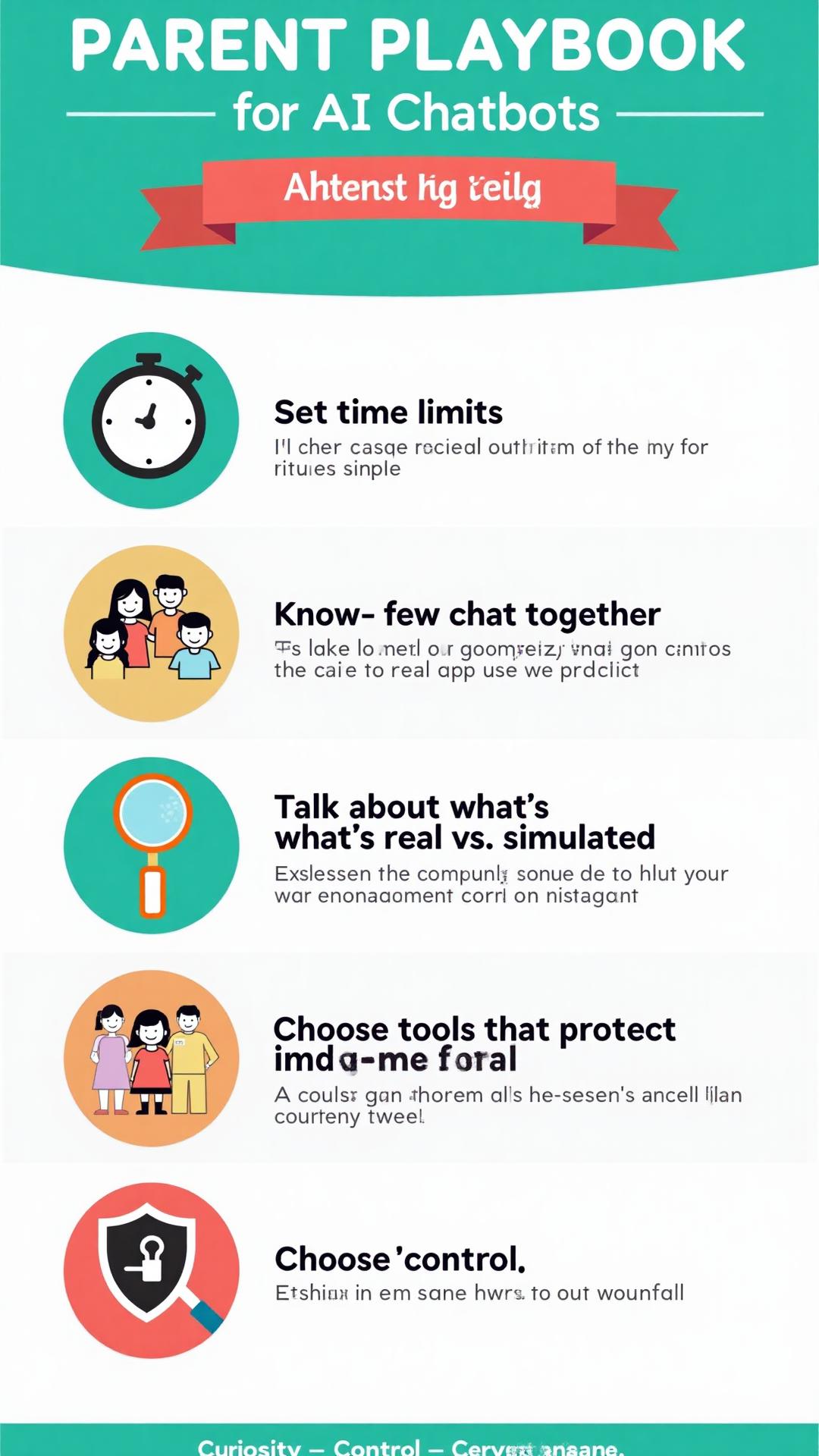
Essential guide for parents navigating AI safety with their children.
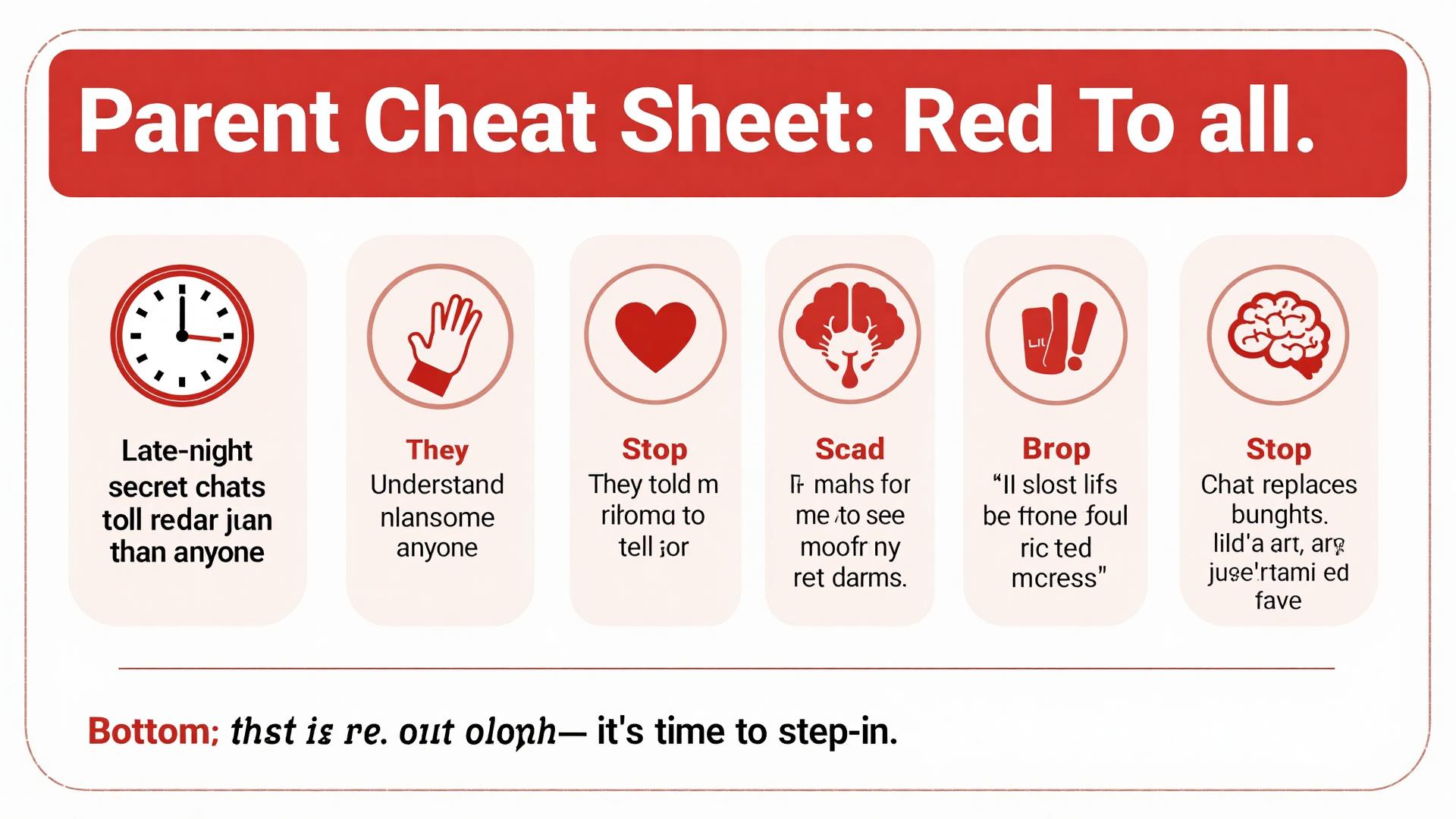
Warning signs parents should watch for when kids interact with AI.